
The Health We Don’t See
Health4 min read
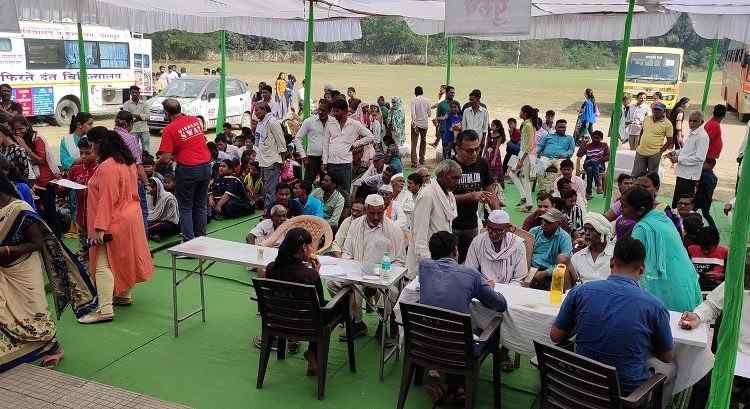
The health of a community is shaped long before a person reaches a hospital.
India's health challenges are not limited to the number of hospitals or doctors available.
They are also about what people eat, where they work, how far they have to travel for care, whether they recognise an illness early, and whether healthcare reaches them at all.
India is facing a growing burden of non-communicable diseases. WHO estimates that 64% of the country's disease burden was from NCDs, including diabetes, hypertension, heart disease and cancers.
And while these challenges affect the country at large, some communities face additional barriers to accessing and maintaining good health.
The communities we don't see enough
India's tribal population makes up 8.6% of the country's population. Yet the health outcomes of tribal communities have historically lagged behind the wider population.
The Government of India's Ministry of Tribal Affairs itself recognises significant disparities in tribal health and identifies geographical isolation, socio-economic disparities and differences in healthcare access as key challenges.
There are also gaps in the health infrastructure serving tribal areas. Government data for 2019–20 recorded a shortfall of 6,602 Sub-Centres, 1,371 Primary Health Centres and 375 Community Health Centres against the requirement for tribal areas.
For communities connected to coal mining and other physically demanding livelihoods, health has another dimension.
Work itself can become a health factor.
When livelihood depends on physically demanding work, taking time away for a health check-up or treatment can mean losing a day's income. Health therefore cannot be separated from the realities of work and family life.
And then there is food
We often think of healthcare as something that happens in a clinic.
But health begins much earlier — on the plate.
An adequate quantity of food does not necessarily mean adequate nutrition. Poor dietary quality is also a recognised risk factor for non-communicable diseases.
For families facing economic constraints, nutrition is not simply a matter of making the “right” choice. It is also about what is affordable, available and culturally familiar.
This is why nutrition needs to be part of the conversation around healthcare — not treated as a separate issue.
So, what needs to change?
Healthcare cannot begin only when someone becomes seriously ill.
It has to move closer to communities.
It has to include prevention, early identification, nutrition and awareness.
And it has to recognise the realities of the people it serves.
Where NCF comes in
This is where NCF's work focuses — bridging the gap between communities and the healthcare support they need.
The approach is built around a simple idea:
Don't wait for illness to become a crisis.
Health outreach brings basic check-ups, medical consultations and essential healthcare support closer to communities that may otherwise face barriers in accessing care.
But medical support is only one part of it.
Health + nutrition
Nutrition support and nutrition kits form an important part of the approach because food is also healthcare.
The focus is not simply on providing something to eat, but on encouraging better nutrition and helping families understand the value of a more balanced diet using foods that are accessible and familiar to them.
Early attention
Regular health interactions can help identify concerns earlier, create awareness around common health risks and guide people towards appropriate treatment or referral when required.
Health that understands work
For coal-mining families and other communities dependent on physically demanding livelihoods, health support must take into account the realities of work, income and family responsibilities.
Health that reaches people
For tribal communities, geographical distance and limited access can become barriers in themselves.
The goal is therefore not simply to tell people to seek healthcare — but to take essential health support closer to where communities live.
The vision
The aim is simple:
To help build healthier tribal and coal-mining communities where healthcare is accessible, prevention is understood, and nutrition is treated as an essential part of health.
Because health is not only about treating disease.
It is about what we eat, how we work, what we know, what we can access — and whether someone is there to help before a health problem becomes a crisis.
This is the health we don't see.
And this is the health we need to start seeing.